What was the most distant outpost of the Roman Empire?
Four thousand kilometres from Rome, a small unit of legionnaires endured vicious pirates, brutal sandstorms, navigational hazards, isolation, nearby active volcanos, disease and boredom for the dubious honour of manning the Empire’s most remote outpost.
Perched on some sun-baked islands of wind-blown sand, limestone and coral, surrounded by hostile tribes, the Farasan Islands in the Red Sea must have hardly been a sought-after posting. A thousand kilometres from the nearest Roman base. Tripwire of empire. The last frontier. The end of a very long logistics chain. Probably not one to put on your CV.
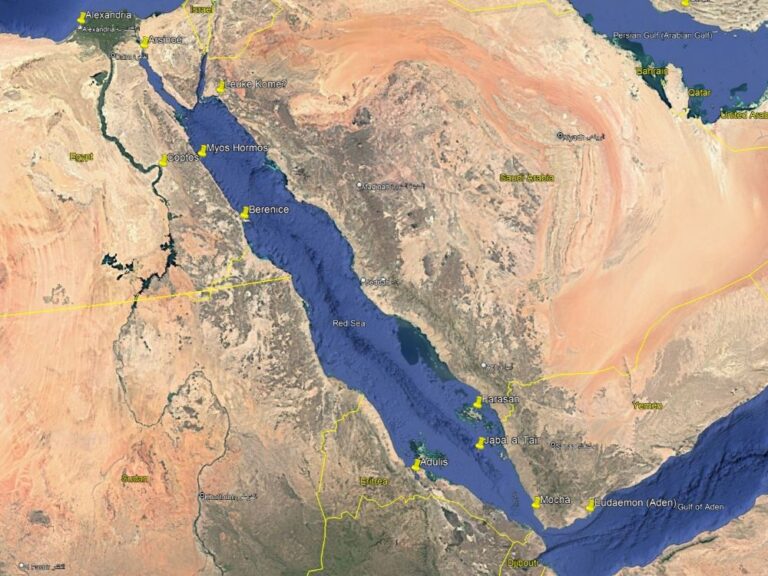
A map of the Red Sea showing ancient places mentioned in this article, along with modern borders and countries. Courtesy Google Earth
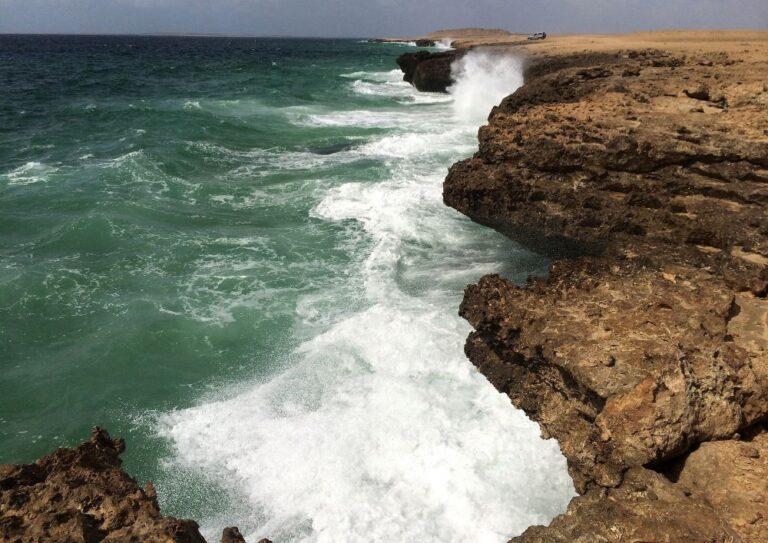
A view of the modern Farasan Islands, off the coast of Saudi Arabia, near to the border with Yemen. The Saudi's are promoting the islands as a tourist destination. Courtesy Khaled Zangoti.
Our story starts in Egypt, with Cleopatra. She was the last of the Ptolemies–a dynasty started by one of Alexander the Great’s generals in 323 BC. She picked the wrong side in a Roman civil war, leading to her defeat (by Augustus, first of the emperors), death, and the absorption of fabulously wealthy Egypt into the Roman Empire upon its foundation in 27 BC.
Egypt’s wealth derived from its location at a crossroads of trade routes from three continents. Alexandria, its capital, was the second city of the empire and its busiest port, with land and sea routes leading west to North Africa, south down the Nile, east throughout Arabia, north into the Levant and the Med, and southeast into the Red Sea.
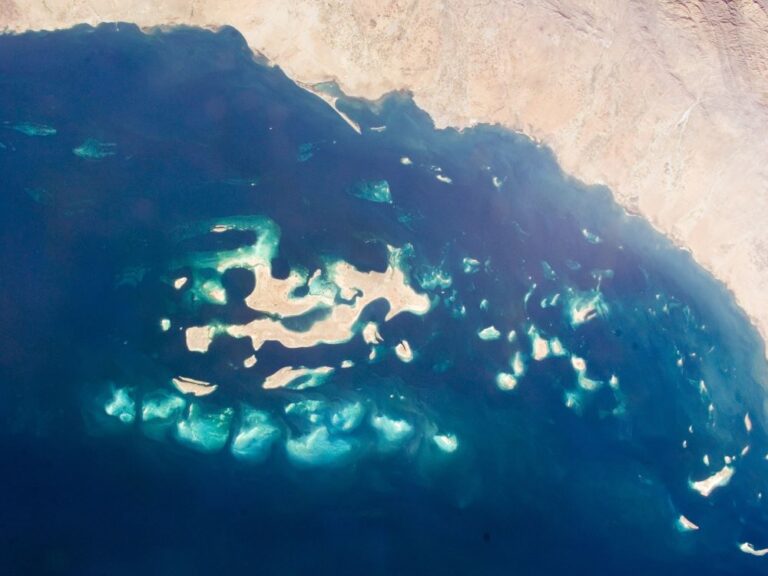
A NASA view of the unusual Farasan Islands from space. Not exactly dream sailing for ancient traders. Courtesy Terry Virts.
Slaves, incense, pearls, fragrances, medicinal products, flavourings, ivory, and spices were hauled by ship through the Red Sea to avoid the lawless and inhospitable wastelands of its shores. But the waters were infested with corsairs from both the Arabian and African coasts, and trade regularly suffered. During the first century AD, Rome derived a tremendous amount of income by collecting taxes from products entering Egypt, and pirates interdicting this they could not tolerate.
After taking over Egypt, in typical thorough Roman fashion, much effort was applied to improving infrastructure for sea trade in the Red Sea. Under Emperor Trajan, an old canal linking the Nile with the Red Sea was cleared and made operational, a harbour and shipyards were built at Arsine (near modern Suez), and a fleet of 130 troopships and 80 galleys was constructed for operations.
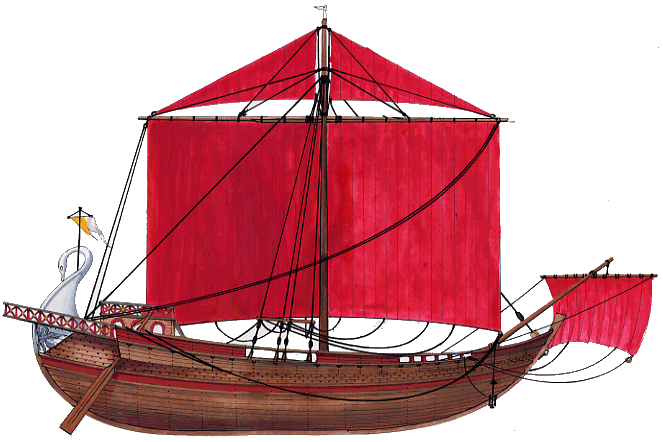
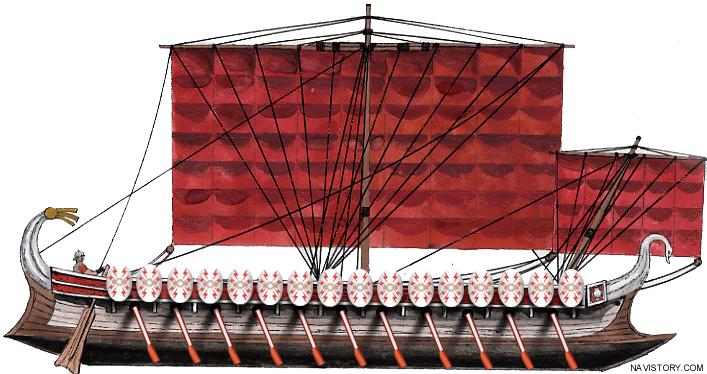
A Corbita, the standard Roman era cargo ship. Such vessels crisscrossed the Med and sailed from the Red Sea to India in large numbers. Courtesy naval-encyclopedia.com
A ground force was dispatched to clean out the Red Sea’s northern shore in 26 BC. By this time, Rome ruled the entire shoreline of the Mediterranean–the first and only power ever to do so–and had spent much energy destroying pirate kingdoms there, particularly in the Adriatic (modern Albania and Croatia), so they were confident of success. The harsh, barren terrain, duplicitous tribes, vast distances and dispersed settlements of Arabia very much blunted the achievements of this force, though it raided as far as Aden, then known as Eudaemon, at the entrance to the Red Sea.
Other Roman harbours were built at Myos Hormos (recently re-discovered) and Berenice connecting across 200 and 400 km of desert respectively to the Nile near Coptos–itself 640 km upstream from Alexandria. Small forts were hacked out of the desert to protect traders and caravans on these routes from raiders, and they were garrisoned with small forces of legion auxiliaries.
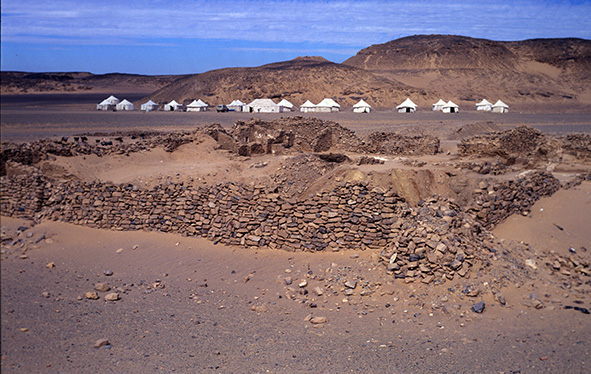
Recently excavated remains of the old Roman fort at Didymoi, one of a chain of such outposts between the Nile and the Red Sea, built to deter desert raiders. Not exactly a dream posting. Courtesy JP Brun.
But the pirates further along the Red Sea remained a problem. Greek scholar Strabo who wrote the epic contemporary snapshot of the known world, Geography, in the first century observed that 120 ships a year sailed from Myos Hormos to India, and that piracy was an ongoing problem. Both coastlines were shrouded in sandbanks, reefs and shallows, making passage and anchoring difficult. Other sections, particularly along the Arabian shore, were rimmed with cliffs. Ships preferred to avoid these hazards by steering down the centre of the sea, staying out of sight of the coast as much as possible, which reduced the chances of pirates sighting them also.
A map illustrating the trade routes of the region between the Roman empire and India. Trade between the two regions flourished in the first and second centuries. Courtesy PHGCOM.
But it was several weeks sailing from Berenice to the exit of the Red Sea through the Bab al-Mandab Strait, and vessels were exposed to attacks for much of this journey. The littoral kingdoms of Nabatea (roughly modern Jordan) and Saba (modern Yemen) levied profitable taxes on land trade routes, so interrupted sea routes was in their interests, and they were lacklustre in their anti-piracy operations. If not, of course, actively involved. Perhaps this encouraged Rome to add Nabatea to their empire in 106 AD, establishing a base and customs point at Leuke Kome.
But Roman geographer Pliny mentions the most fearful of the Red Sea pirates were the Ascitae, who were based from islands near the Farasans. They approached anchored ships at night on rafts, and used poison arrows in battle. To combat such corsairs, Roman trade ships need to employ mercenary archers who fought from behind palisades, some ships even mounting bolt-firing catapults to repel attacks.
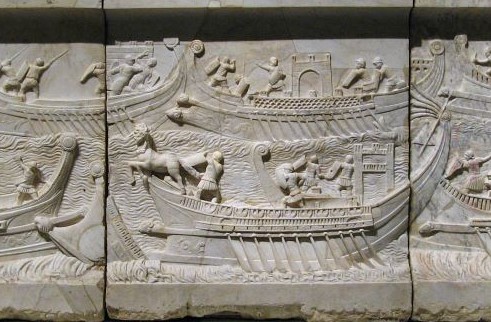
A liburner galley of the sort that may have carried out anti-piracy patrols from Farasan. Courtesy naval-encyclopedia.com
Probably because of the cost to merchants of continued Ascitae attacks on shipping, eventually, a vexillation (detachment) of the Syrian-based Legio VI Ferrata was posted to establish a galley base at the Farasans. This legion had recently fought in Armenia and Judea, and based on the frontier with the Parthian Empire was no doubt a battle-hardened frontline formation. Look out pirates!
We know all this because of remarkable inscriptions found carved in stone and sited presumably at the Roman base on Farasan Island. The first, dated to 120 AD, identifies the legion and mentions Portus Ferresanus as a prefecture–not some short-term camp, but a permanent base. The implication is that this outpost, 1000 km from the nearest known Roman base at Berenice was a home to a pirate hunting galley unit for at least several decades. This unit would have likely been sent under Emperor Trajan, and coincided with the Roman empire reaching its greatest extent–extending from Morocco to Armenia, and from Scotland to Farasan.
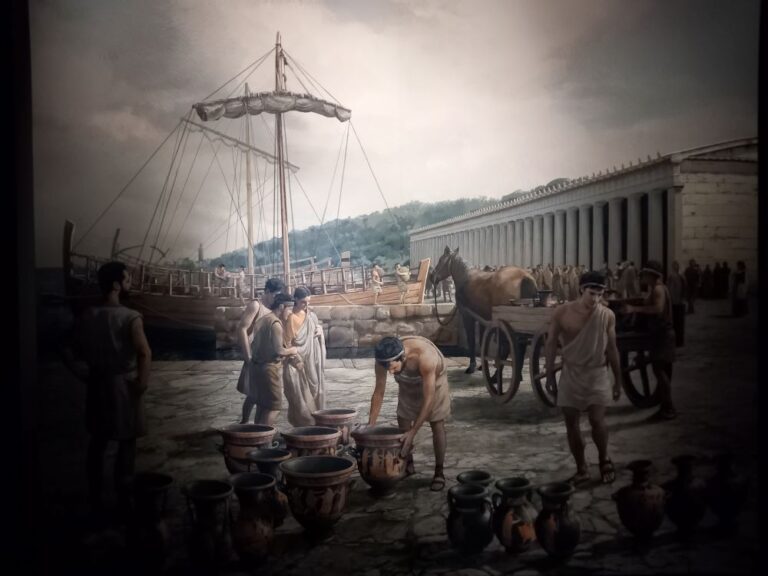
A depiction of a harbour scene from ancient times. Perhaps Myos Hormos or Berenice looked like this at one time.
A second inscription dated to 144 AD, clearer than the first, reinforces the concept of the base as a prefecture, this time under the province of Egypt, rather than Arabia. In the inscription, Castricius Aprinus identifies himself as prefect of Farasan and the Sea of Hercules (southern Red Sea), detached from the Egypt-based Legio II Traian Fortis. Sadly, we don’t know if Aprinus was sent to remote Farasan because of mis-deeds or his pirate-fighting ability, and can only speculate on whether he and his men enjoyed the deployment. Probably not.
Vexillations varied in size according to role, but were likely to have amounted to at least several hundred men to operate a squadron of galleys and secure their own base. These inscriptions, discovered only in the 1990’s were scientifically examined in 2003, and reshaped history’s understanding of the reach of the Romans and their domination of the Red Sea. One report even suggests this presence was the springboard for a Roman invasion of India.
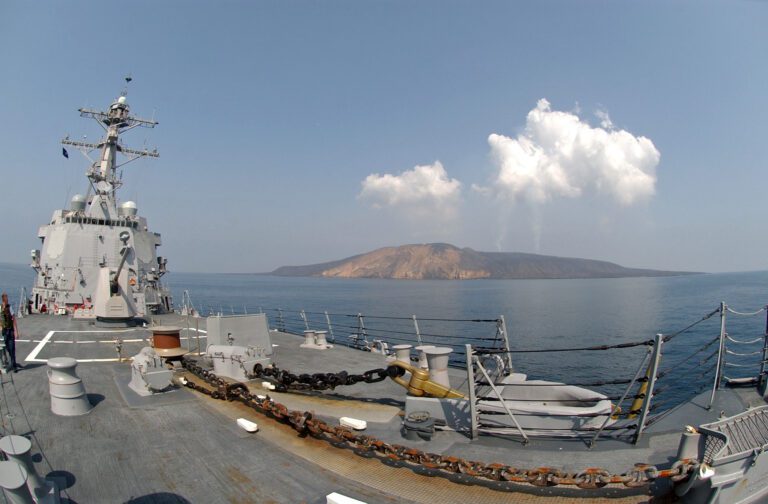
USN DDG Bainbridge on anti-piracy patrol in the Red Sea in 2007, with Burnt Island (Jabal al-Tair) after a recent eruption behind.
Just south of the Farasans is an isolated active stratovolcano now known as Jabal al-Tair, but in those times called Burnt Island. This marked the end of the dangerous stretch of pirate waters, as the Saba kingdom is approached. Farasan-based galleys would have needed to cover the waters between their base and Berenice, and the 500 km to the narrow exit to the Red Sea to the south. Predominantly the winds here are northerly, making the passage south under sail much easier than the long row back home to the north. But it was probably slaves doing the rowing anyway.
Unfortunately, we know nothing about the Roman base at Farasan except what the inscriptions tell us. We also have no idea how long their presence on these islands (near the current Saudi-Yemeni border) lasted, whether they were abandoned, or who took it from them. In later times, the Ottomans built a fort there, suggesting a continuing need to police brigands and raiders. And it is certainly thought provoking to consider that two thousand years later, the world still has a pirate problem in these very waters. From poisoned arrows to drones and cruise missiles. Perhaps, we need to get the legionnaires back.
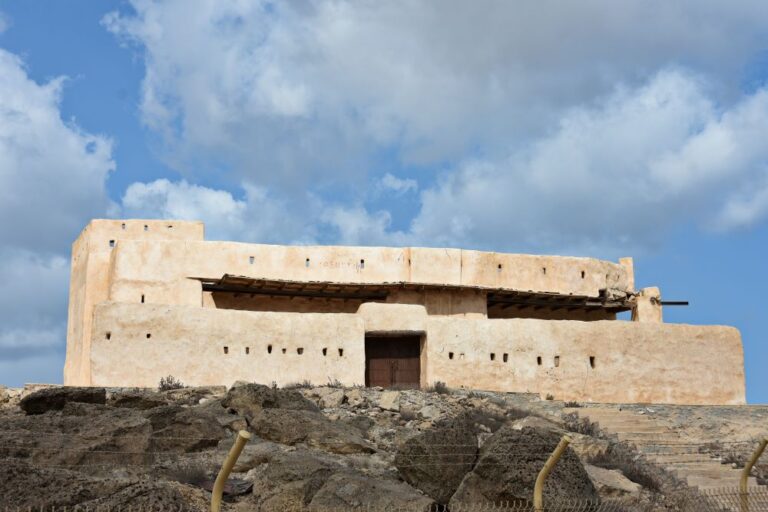
During the Ottoman era, Farasan was controlled by forces of the sultan, who built this fort. Yes, to subdue pirates. Courtesy Richard Mortel.
So, was Farasan really Rome’s most remote base? Hadrians Wall in Scotland is a piddly 2000 km away from Rome by comparison. Some outposts in modern Germany on the far side of the Danube, just 1000 km distant. There were a series of far-flung forts in Romania about 1200 km away. Best challengers are some of the old legionnaires bases in modern Armenia, and in Iraq on the east bank of the Euphrates, but they are still less than 3000 km from Rome. And though Rome succumbed to Germanic tribes in 476, signalling the end of empire, the eastern, Constantinople-based Byzantine empire survived another thousand years. Did they have more distant bases? No. At their greatest extent, the Byzantines ran a colony in modern Morocco, around 3200 km from their capital. Farasan takes the medal!
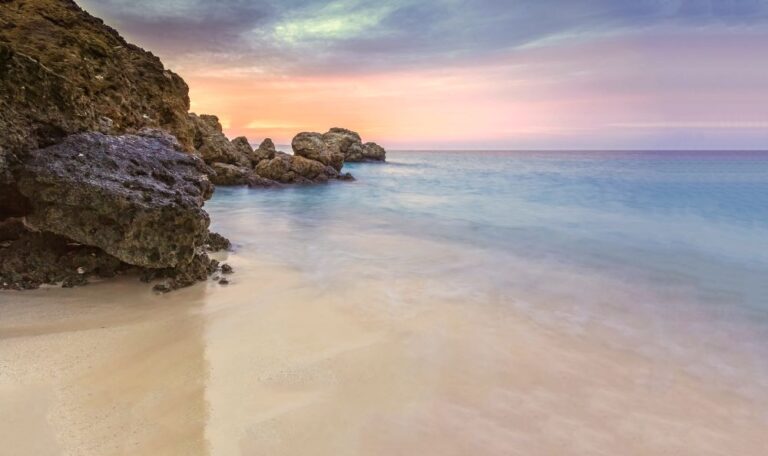
For Roman soldiers stationed on Farasan in the second century, the beguiling beauty of the place must have stood in stark contrast to the harsh climate, tough discipline and brutal neighbours. Courtesy Bandar Yuosef.
Most of the source for this article comes from Raoul McLaughlin’s excellent book The Roman Empire and the Indian Ocean, 2014. It is well worth a read if this topic interests you.