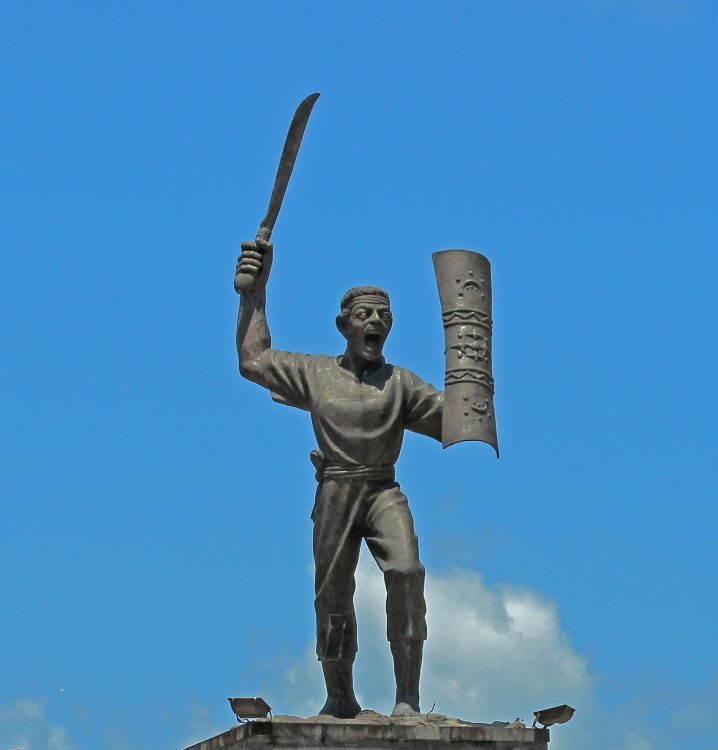
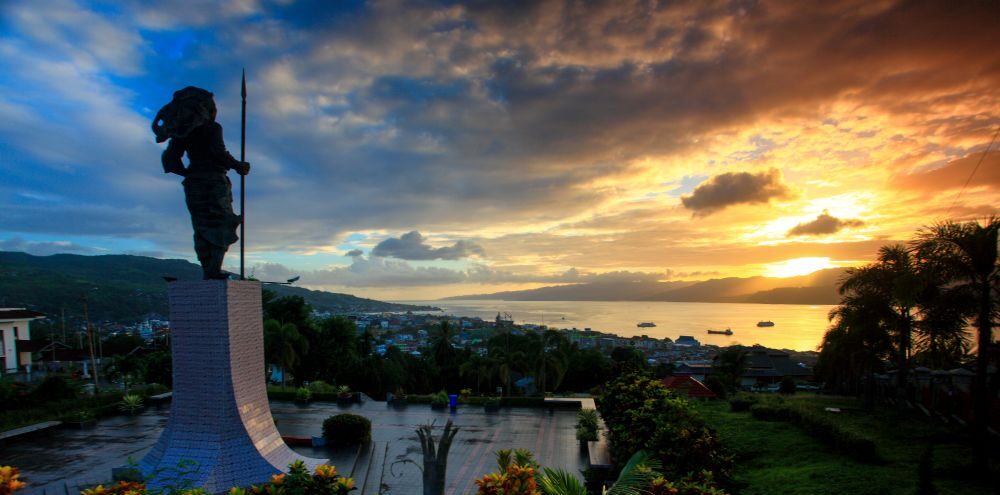
A statue of local freedom-fighter Maria Tiahahu looking over the great bay of Ambon.
Fort Victoria, commanding Ambon’s superb natural harbour, started out life as Forte Nossa Senhora da Anunciada, a small two-bastion stone fort built by the Portuguese in 1576. This makes it the second oldest of the Spice Islands Forts (after Kastella on Ternate, dating from 1522), and only the fourth colonial fortification in Southeast Asia (after Malacca, 1509 and Pasai, Sumatra, 1521).
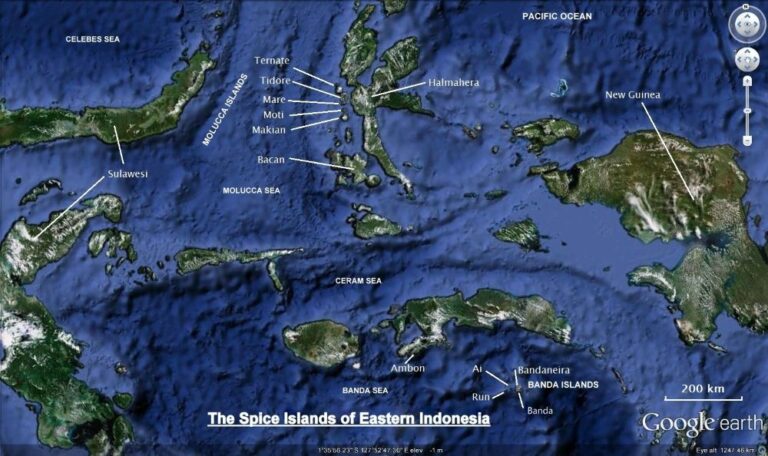
Eastern Indonesia, showing the location of the clove Moluccas in the north, the nutmeg Bandas to the south, and between them, the best natural harbour in eastern Indonesia, Ambon. Courtesy Google Earth
The Portuguese recognised the strategic dominance that Ambon offered its spice targets in the clove islands (Moluccas) 500 km to the north; and the nutmeg islands (Bandas) 200 km to the southeast, and had earlier built a fortified trading lodge to establish control. This lodge was located across the bay from Fort Victoria, near the site of the modern Pattimura Airport, but was later destroyed in continuous conflict with Islamic tribes who dominated the larger, northern section of Ambon Island known as Hitu.
To the Portuguese, and later the Dutch, Ambon was a great asset, not just because of its enormous harbour, but because the island consisted of a significant land area–unlike the tiny volcanoes of the Moluccas and Bandas–which allowed agriculture and cropping to provide foodstuffs for the region. Later, spices were also grown on Ambon.
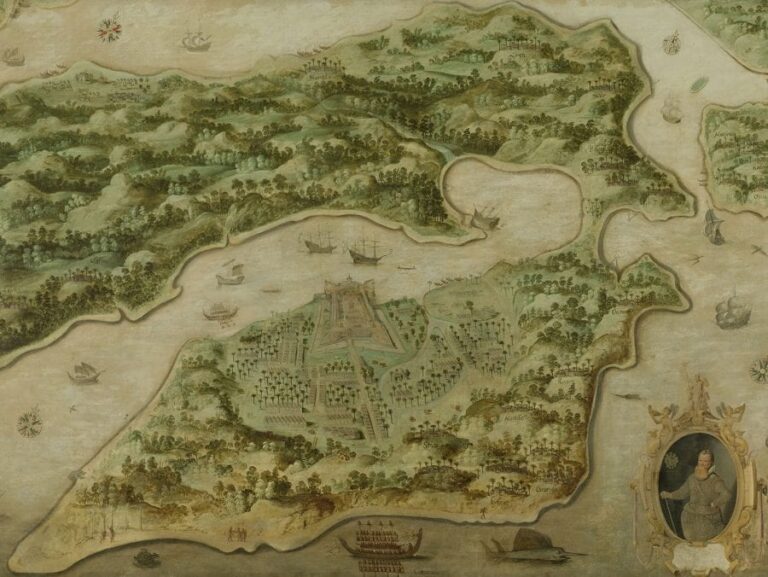
An overview of Ambon, from the south, showing a very enlarged Fort Victoria. Also evident is the narrow passage between the larger Hitu and the southern Lattimor parts of the island. From Meyne 1617, courtesy Rijksmuseum.
The island additionally supported a large population which was split between Muslim and animist religions. This later group, based on the southern Lattimore peninsula were open to conversion to Christianity, and would go on to form the basis of a loyal Portuguese militia, and later the core of the Royal Dutch Indies Army (KNIL).
Ambon also benefited from its location between the winds; the tradewinds blew from the south in the middle of the year, allowing access to the Moluccas and Java, while the year-end northerlies brought clove-laden ships down from Ternate, and traders east from Java.
The very limited initial Portuguese fort was improved and expanded as threats developed. Both Ternatean and Javanese forces unsuccessfully attacked it, and it held off one assault by the Dutch, before surrendering to their forces in 1605. At that time, it was a well-armed and powerful fort, and there are suggestions that the fort’s governor was bribed to hold his fire.
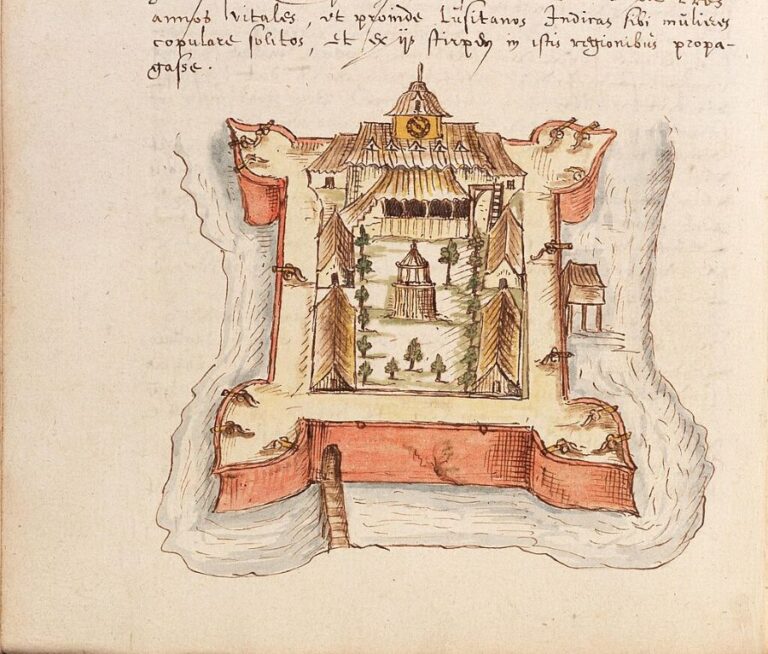
A birds-eye view of Fort Victoria early in the C17th from the Leupe Catalogue. This is before substantial modifications have been made to the Portuguese defences and layout.
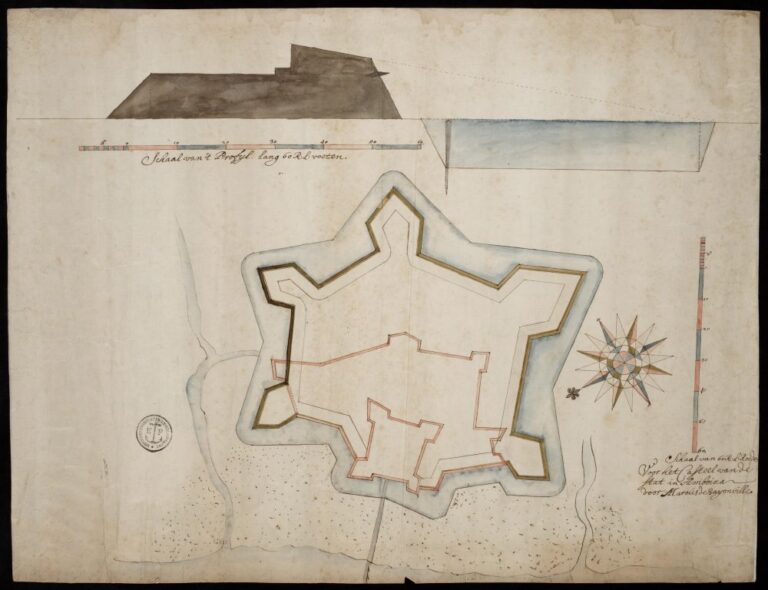
The VOC’s Admiral van der Hagen upon capturing the fort renamed it Fort Victoria, to celebrate his bloodless victory. Over the years, the Dutch expanded the original fortifications to keep in line with modern concepts, and it formed the centre of a web of forts and blockhouses that extended through Ambon and the adjacent islands. Rebuilding was required after earthquakes in 1643, 1644, 1672, 1673 and 1730. The later was extremely destructive and required a complete reconstruction, whereby it was named Fort New Victoria.
All these modern defences, garrison troops and artillery were wasted however when the fortress surrendered to a British force without resistance in 1796. Back in Dutch hands, it was again taken by the British when it was bombarded by the captured guns of one of its nearby batteries in 1810.
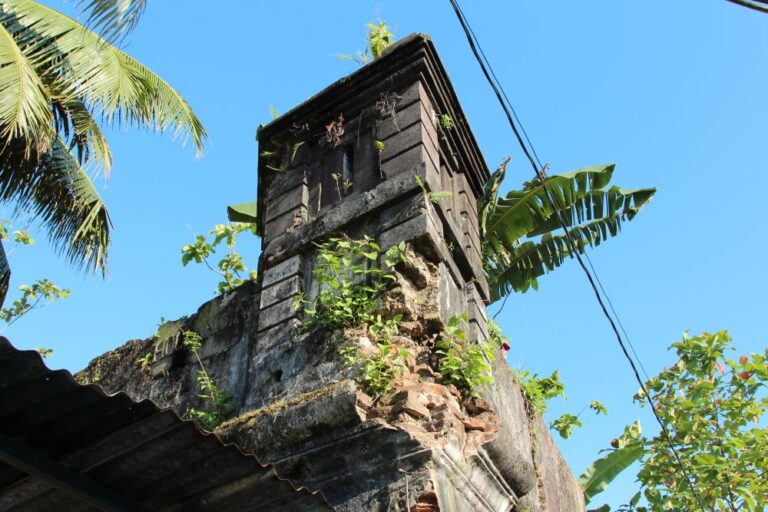
Hollandia bastion today. This is a modification of one of the original Portuguese bastions, dating from 1570's. It has clearly seen some action.
Thereafter, for over a century, Fort Victoria remained the central base of the Dutch in the east of their Indies. With earthquakes and regular rebellions, it was rarely a quiet post. Indonesian national hero, Pattimura, after storming Fort Dursteede on nearby Saparua was captured by the Dutch and hanged in Fort Victoria in 1817, and remains an anti-colonial folk hero throughout modern Indonesia.
External threats were absent until the Japanese captured the entire Dutch colony in a lightning campaign in 1942. A hastily assembled Dutch-Australian force tasked with defending Ambon was overwhelmed, and the fortress occupied as the major Japanese regional base for the duration of the conflict. This led to Ambon being heavily bombed by allied aircraft, and the fortress was badly damaged during these raids.
A statue in Ambon of Pattimura on the warpath. Trained by the British during their brief occupation, he rebelled against the Dutch, stormed nearby Fort Duurstede, putting all to the sword, was captured, and later hanged at Fort Victoria in 1817.
Immediately following the war, Australian troops took the surrender of Japanese forces, but when the Dutch returned to resume colonial control, widespread rebellion greeted them. Eventually, after pressure from the US and the United Nations, independence was granted to the new nation of Indonesia.
Ambon, being a bastion of Christianity in a largely Muslim nation and a long-time provider of soldiers for Dutch forces, was decidedly unpopular in the new nation, and sought its own independence. This was quickly rejected by Jakarta, but the Ambonese unilaterally declared the Republic of South Molucca (RMS) in April 1950 at Ambon.
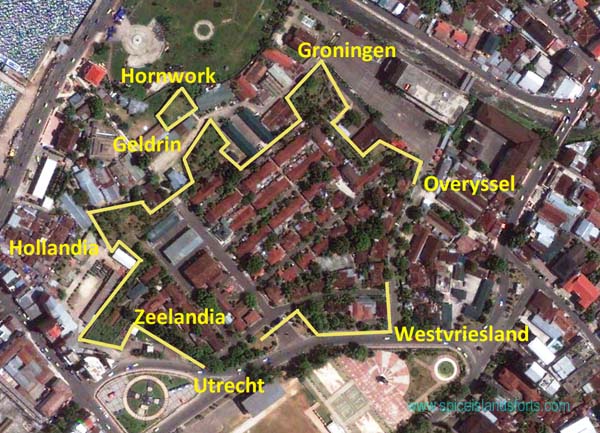
A marked-up plan of today's fortress, showing in yellow the surviving elements. Authors work/ Google Earth.
In already fragmented Indonesia, regional succession could not be tolerated, lest other provinces like Sumatra and Sulawesi followed. An operation to recapture Ambon was launched against RMS forces in July 1950, but the hilly terrain and guerilla warfare from RMS units hindered progress, as various Indonesian Army units slowly converged on Ambon city.
Eventually, after months of combat and severe casualties, the Indonesian Army closed in on Fort Victoria–the headquarters of the RMS. Rebels hiding in tunnels under the fort ambushed the approaching Indonesian troops causing more casualties. Leader of one of the attacking units, Lt Colonel Slamet Riyadi, was killed riding a tank in the final assault.
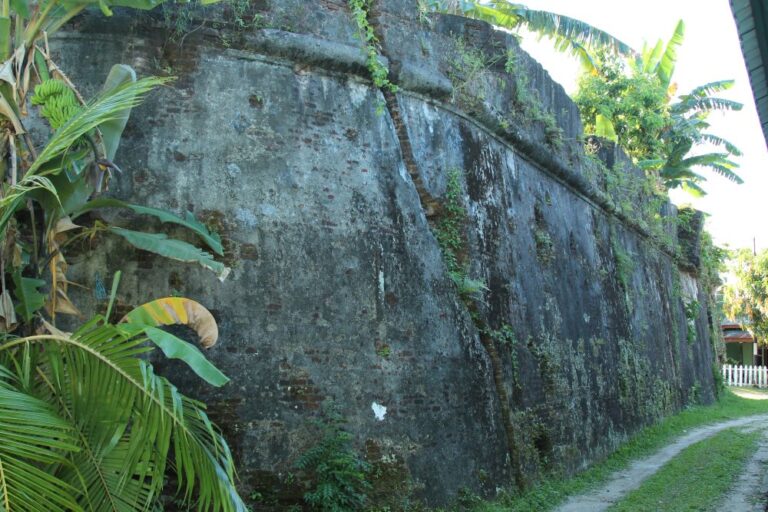
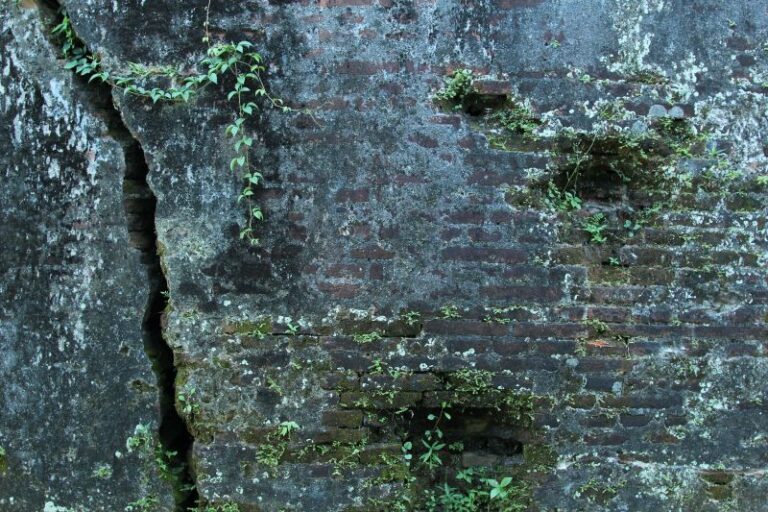
A section of surviving curtain wall displays the scars of centuries of battle and earthquakes.
Ambon was virtually destroyed during the fighting; an Australian observer noted only four buildings left standing in the entire city. The old fortress suffered heavily from artillery, air and naval bombardment to add to its other, older scars. The RMS went into exile, and remain so today, based in the Netherlands, and still dreaming of an independent republic. In response to the costly military campaign to subdue the rebellion, the Indonesian Army formed a special forces unit, today evolved into Kopassus.
Following their victory, the Indonesian Army took control of the battered fortress, and maintain their hold on it today, 75 years later. It serves as the headquarters for Kodam XV/Pattimura Command, the formation responsible for defence of the modern Spice Islands. Significant parts of the perimeter walls, bastions and internal structures have been modified or demolished over the years, but surprisingly, much remains of some elements of the old structure.
Most fascinating, the bastions Geldrin and Hollandia are still apparent. These were modifications by the Dutch of the original Portuguese seaside ramparts, so within these old, scarred walls are no doubt some stones laid by intrepid Portuguese conquerors, very far from home, late in the sixteenth century!
A late seventeenth century plan for upgrading the Dutch defences. The original rectangular Portuguese fort is shown in the centre bottom of the image. Courtesy Netherlands National Archives.
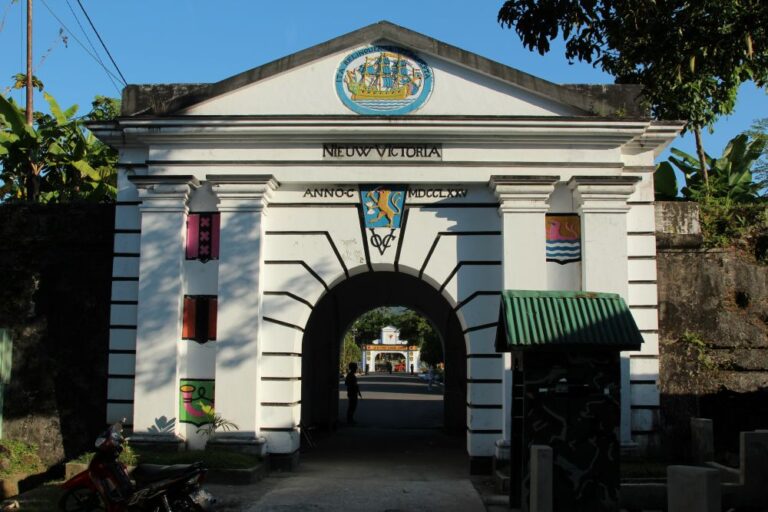
The Water Gate today. The crests of the original founding chambers of the VOC adorn the structure. Note that as the fort is a functioning military base, taking photos is not permitted and will cause problems with armed sentries. The photos here were taken on an organised inspection with senior TNI officers.
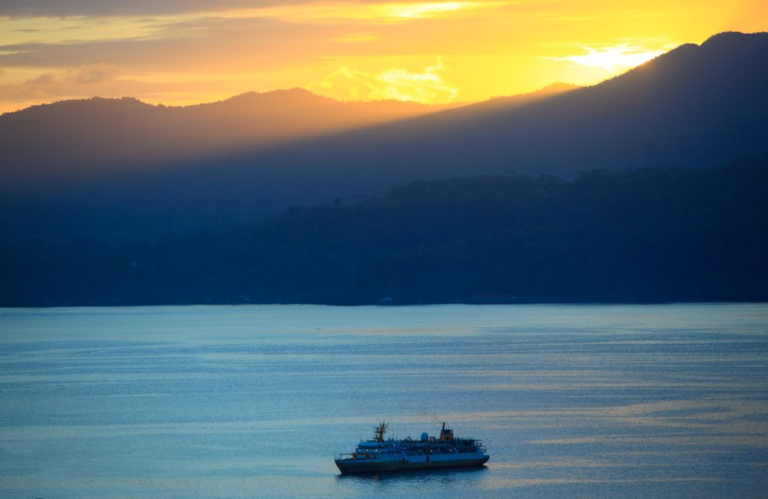
The great bay and rugged hills of Ambon, dwarfs a Pelni liner.